2025 SME Finance Accessibility Survey and Research
Table of Contents
Linkflow Capital operates a SME loan portal for SME owners to compare their business financing options online instantly.
We have been aggregating data collated from our SME business loan comparison platform since 2017. This report summarizes the data researched from January to December 2025.
Our key takeaway from 2025's survey data:
“SMEs Saw Modest Relief in 2025: Borrowing Costs Eased to 8.18%, Larger Loan Quantum Returned”
Singapore SMEs experienced the first easing in borrowing costs in years, as average rates eased to 8.18% p.a. in 2025, down from the multi-year high of 8.47% recorded in 2024.
Approvals for larger loans above $500K also resumed after disappearing entirely in 2024, signaling a tentative thaw in lending conditions.
The recovery, however, remained uneven. Application processing times stretched meaningfully longer than the year before, prompting more SMEs to turn to non-bank funders for faster access to capital.
SME Borrowing Costs Ease to 8.18% in 2025, Down from 2024 Peak
According to our internal data at Linkflow Capital, the average interest rate for SME loans eased to 8.18% per annum in 2025, providing modest relief for SME borrowers from the multi-year high of 8.47% recorded in 2024.
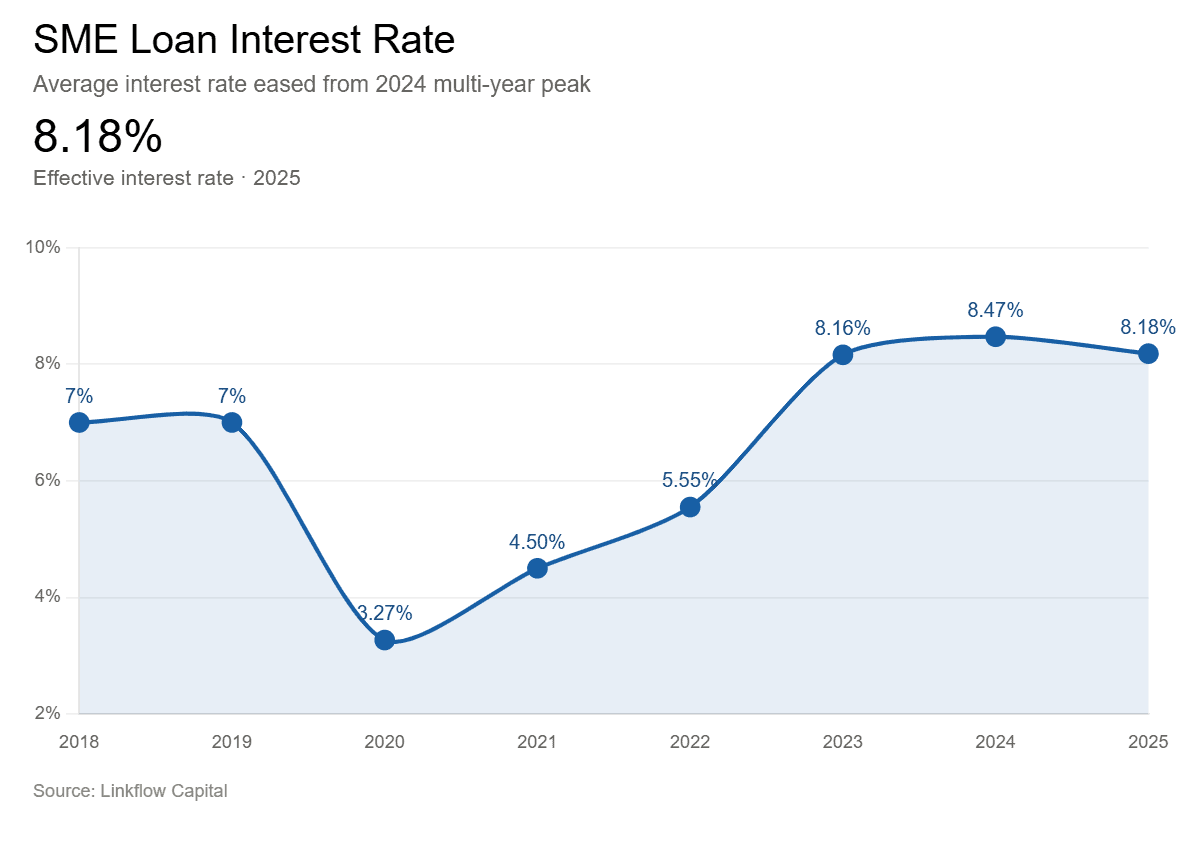
The 29 basis-point decline marks the first downward movement in SME borrowing costs in our records after three consecutive years of sharp increases.
While the relief is welcomed by SMEs, lending rates remain elevated by historical standards. The 2025 average is still well above the 5.55% recorded in 2022 and almost double the 4.5% lows during the post pandemic-era support periods.
The easing aligns with the broader downward shift in benchmark rates through 2025.
The 3-month SORA benchmark trended lower over the year as the US Federal Reserve commenced its rate-cut cycle, and the Monetary Authority of Singapore [1] modestly loosened monetary policy in April 2025 in response to weakening external demand and the uncertainty triggered by the US tariff announcements.
Why Rate Relief Has Been Modest
The domestic reference rate (3-month SORA) which banks commonly use to price mortgage loans such as commercial property loans, have seen a decline of close to 58% in 2025.
This drop, from average of about 2.95% in January 2025 to a roughly 173 basis points decline to 1.22% in December 2025 is far from commensurate with SME interest rates movement.

The pass-through from falling benchmark rates to actual SME borrowing costs has been measured rather than swift, for a few reasons.
First, SME unsecured lending rates are generally "stickier" than mortgage or consumer borrowing rates, often reflecting higher risk premiums and slower repricing cycles.
Banks tend to lag broader rate movements when underwriting unsecured SME credit, particularly when the macro backdrop carries elevated risk.
Second, banks remained cautious through 2025, with credit appetite tempered by the ongoing tariff overhang.
The Monetary Authority of Singapore's Financial Stability Review [2] released in November 2025 noted that banks are watchful of risks arising from shifts in global trade policies. This vigilance could have translated into preserved risk premiums on new loan originations through the year.
The runoff and cessation of government financing schemes such as the Temporary Bridging Loan introduced during the Covid-19 period is also a contributing factor to the stubbornly high cost of SME financing.
With lower government risk sharing, banks have lesser incentives to reduce SME unsecured interest rate in tandem with market conditions. In a previous article, we shared how strategic enhancements to government financing schemes could help SMEs close the gap in financing costs.
While borrowing costs have eased modestly, a more telling signal of the lending environment lies in what banks are actually approving. This brings us to one of the more notable shifts in our 2025 data.
Larger Loan Approvals Return After Year-Long Absence
Our internal data indicates a meaningful shift in the distribution of approved loan sizes in 2025.
Loans above $500K, which had disappeared entirely from our platform's approved pool in 2024, returned to form 5% of approved loans in 2025. The $300K-$500K bracket also expanded, rising to 7% from 3% in 2024.
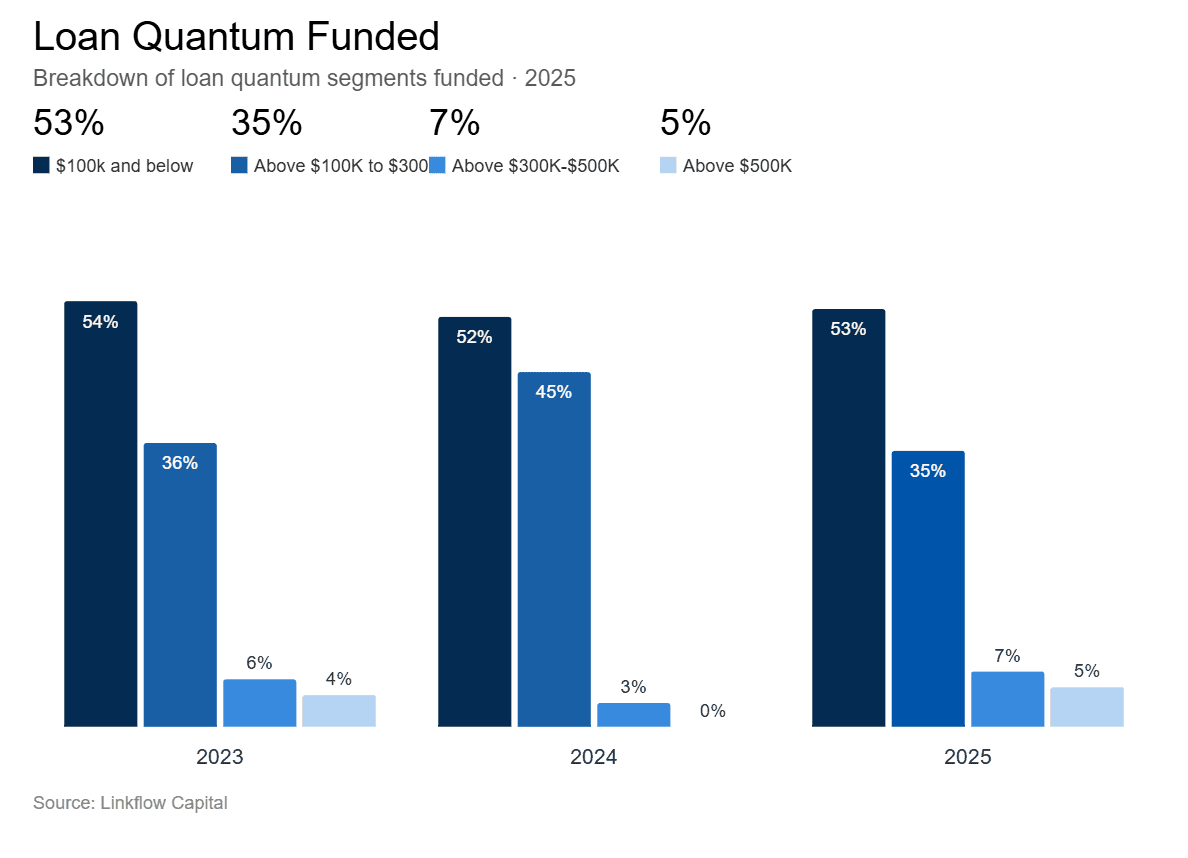
Combined, larger ticket-sized loans of above $300K accounted for 12% of all approvals in 2025, up from a combined 3% in 2024.
This marks a notable recovery in banks' risk appetite for larger unsecured SME financing, after a year in which lenders had pulled back sharply on ticket sizes in response to elevated interest rates and persistent macroeconomic uncertainty.
Some factors likely contributed to this recovery.
Firstly, banks have had more time to recalibrate their risk models post-pandemic. With the runoff of enhanced government-backed financing schemes largely complete and base loan books stabilizing, lenders have regained some capacity to extend larger unsecured exposures.
Most SMEs which tapped into larger loans during the breakout of the pandemic in early 2020 would have these loans matured by 2025 (most SME loans are 5 years repayment terms). These loan maturities would have cleared off more cap for debt servicing ratios.
Secondly, the permanent increase in the SME Working Capital Loan cap to $500,000 announced in Budget 2024, now fully absorbed into the market, has enabled more approvals at or near the upper limit of the enhanced scheme.
The share of smaller loans ($100K and below) remained broadly stable at 53% of approvals, consistent with 2023 and 2024. This suggests that while larger loans returned, micro and early-stage SMEs will still face limited borrowing capacity.
Despite the return of larger loans, the overall average approved loan quantum stayed relatively stable, a nuance we'll examine more closely.
Average Approved Loan Quantum
Despite the return of larger loans at the top end and continued demand for smaller tickets at the bottom, our data shows that the average approved loan quantum remained virtually unchanged in 2025 at $132,842, compared to $132,656 in 2024.
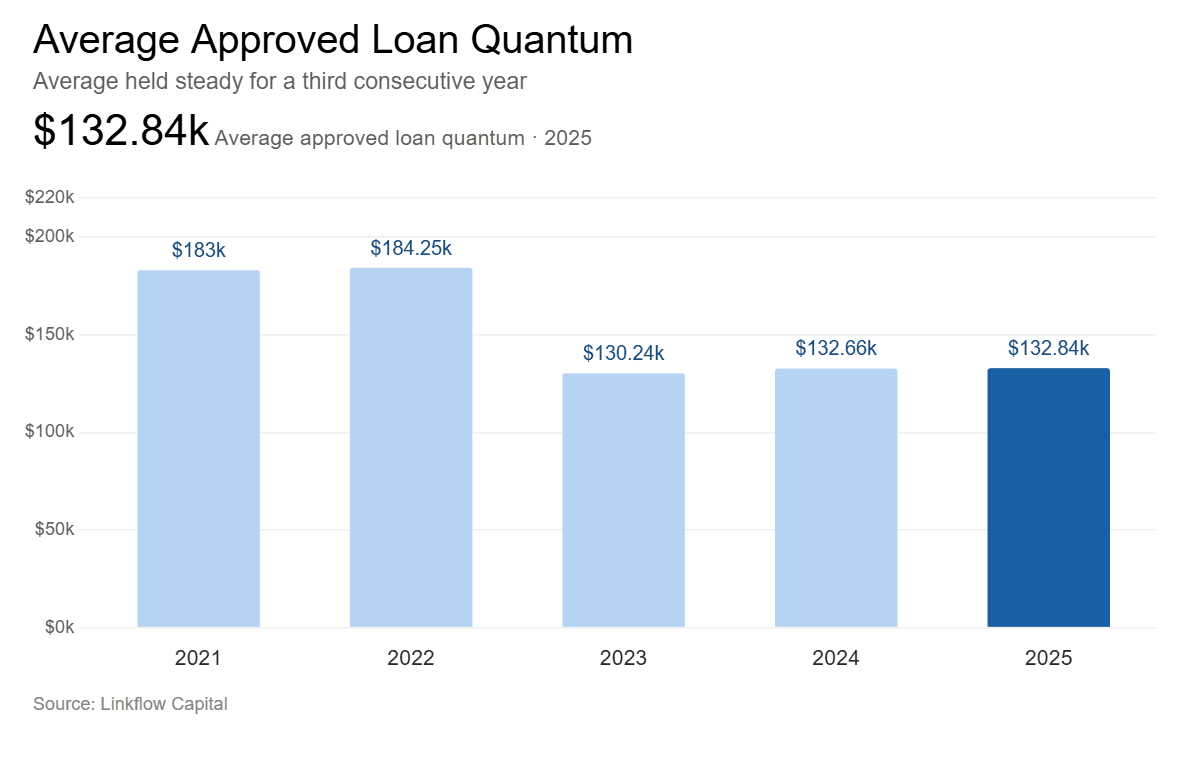
The average loan quantum stayed within a tight range of $130K to $133K for last three consecutive years (2023 to 2025). This stability reflects a composition effect within approved loans, rather than a broad recovery in loan ticket sizes.
While larger loans above $300K grew their share of approvals in 2025, this was offset by continued demand from micro and small enterprises borrowing in the under-$100K segment. The two ends balanced out, leaving the average essentially flat.
The 2025 average remains 28% below the 2022 peak of $184K, post pandemic-era, suggesting that the SME lending market has settled into a new, lower equilibrium in terms of typical loan size.
Notably, MAS data on total loans to businesses in 2025 indicated system-wide loan growth that accelerated markedly through the year, ending at +12.00% year-on-year in December 2025. This is a substantial acceleration from the 1.44% YoY growth recorded in December 2024.
This data aligns with what we observed on the ground. We experienced a surge in SME credit demand from late Q2 and throughout the entire 2nd half of 2025, after a tepid Q1.
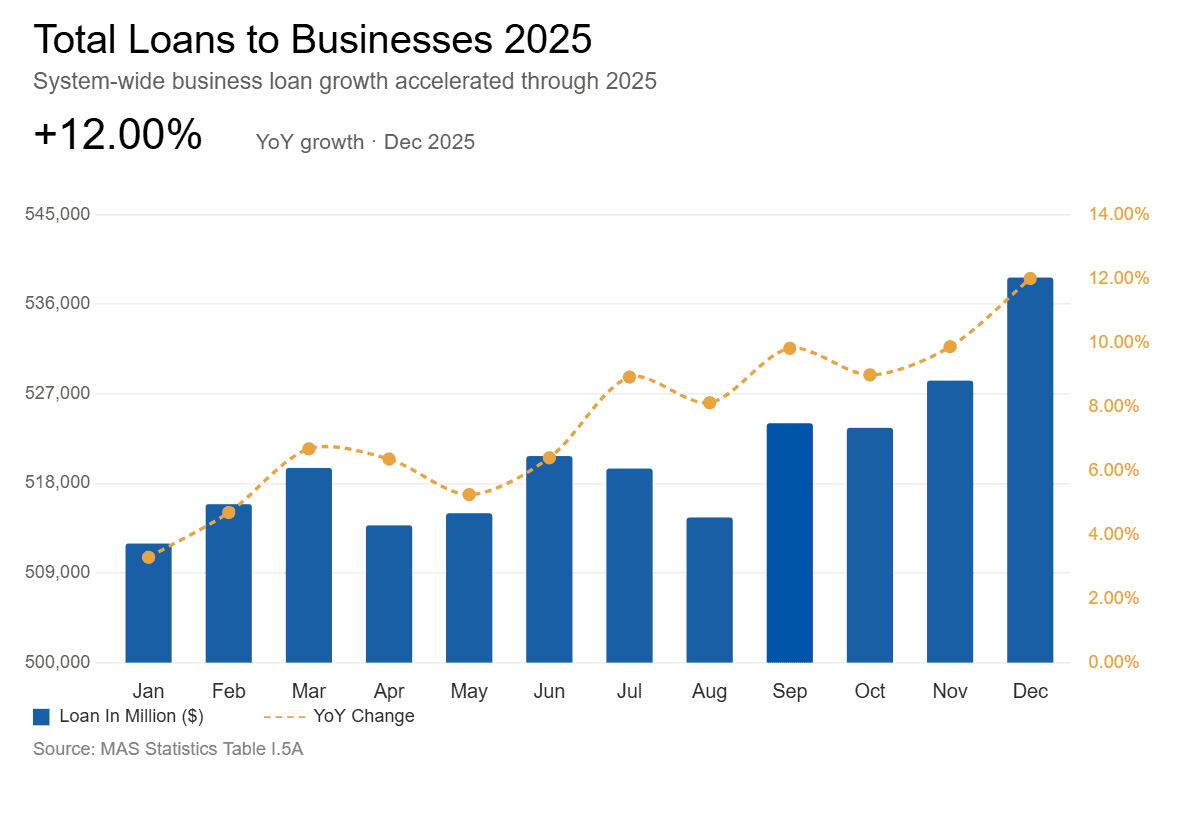
source: https://www.mas.gov.sg/statistics/monthly-statistical-bulletin/
The monthly YoY trend line indicates that lending momentum built steadily from the first quarter through the end of the year, with growth reaching double-digits from September onwards.
A Business Times article [3] published in February 2026 also noted that Singapore’s bank lending in December 2025 charted the highest monthly increase since December 2024, driven primarily by an increase in loans to businesses.
This broader systemic growth, however, are mainly driven by larger corporate entities. The contrast with the stable-but-flat average loan quantum observed on our SME-focused platform reinforces our earlier observation that SMEs continue to participate unevenly in the overall credit expansion.
The MAS Financial Stability Review published in November 2025 [2] corroborates this.
MAS reported that aggregate outstanding SME loans continued to ease through 2025, due to the natural runoff of enhanced Enterprise Singapore (ESG) loan schemes introduced during COVID-19. Outstanding SME loans not under ESG loan schemes, by contrast, remained steady, not expansionary, suggesting underlying credit supply to SMEs has broadly held up.
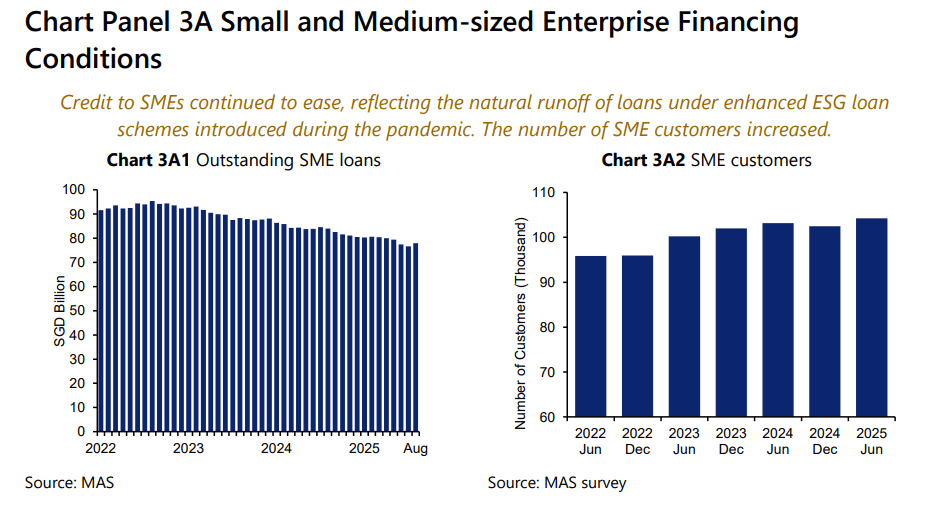

Interestingly, MAS also reported that the number of SME borrowers continued to rise slightly through 2025. We infer that more SMEs are accessing bank credit, but at smaller average loan sizes, consistent with our platform data.
Platform Users’ Revenue Profile
Our platform continues to attract a broad mix of SMEs, though the majority remain concentrated in the smaller revenue bands.
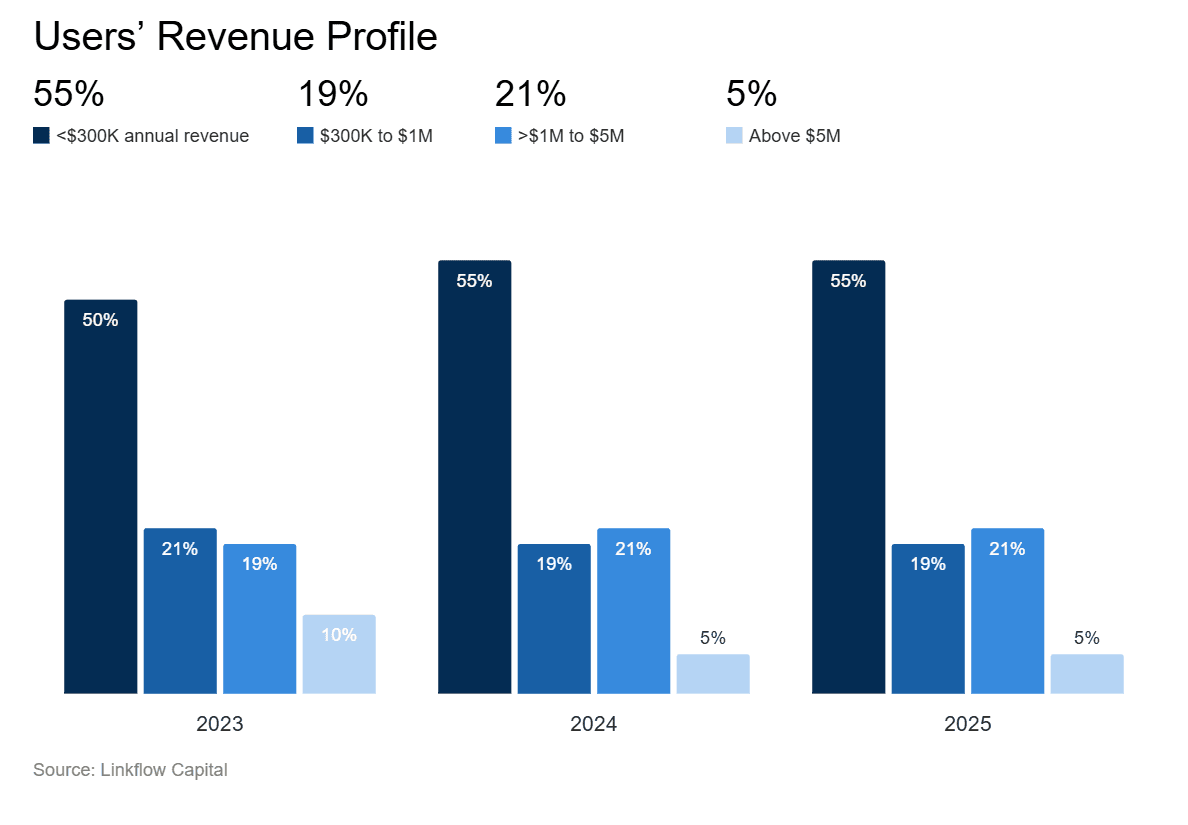
In 2025, 55% of applicants reported annual revenue below $300K, unchanged from 55% in 2024 and notably higher than the 50% in 2023.
The $300K to $1M segment accounted for 19%, while 21% fell into the $1M to $5M range. Only 5% of users reported revenue above $5M.
This concentration in the lower revenue brackets remained identical for two consecutive years. It reflects the structural demographic of Singapore's SME landscape, where the majority are micro and small enterprises with limited revenue scale.
The consistency of this distribution is important context for interpreting the rest of our data. Given that more than half of our applicants fall below the $300K revenue mark, the underwriting outcomes we observe reflect the credit realities of Singapore's smallest businesses in particular.
Revenue is one of the strongest single determinants of approved loan size. In practice, lenders assess repayment capacity from a combination of historical revenue, operating cash flow, and future sustainability.
A review of our 2025 approvals again confirms the same positive correlation between a business's annual revenue and its approved loan amount. Businesses with higher revenue tend to be approved for higher loan quantum.
This correlation has remained consistent across our annual surveys, reaffirming a business's topline as a stable benchmark in SME loan underwriting models.
Against this backdrop of applicant profile stability, the more meaningful question is how the credit approval environment itself has shifted. This brings us to the loan approval rate for 2025.
Loan Approval Rate
Our 2025 survey data reveals a recovery in the overall SME loan approval rate to 74%, up from a five-year low of 70% in 2024.
While still below the 76% recorded in 2023, this rebound signals a moderate easing in credit underwriting standards.
Banks might have regained some appetite alongside the broader stabilizing rate environment and natural run-off of the pandemic-era government financing schemes, freeing up debt servicing capacity for SMEs which might have loaded up on credit from 2020 to 2022.
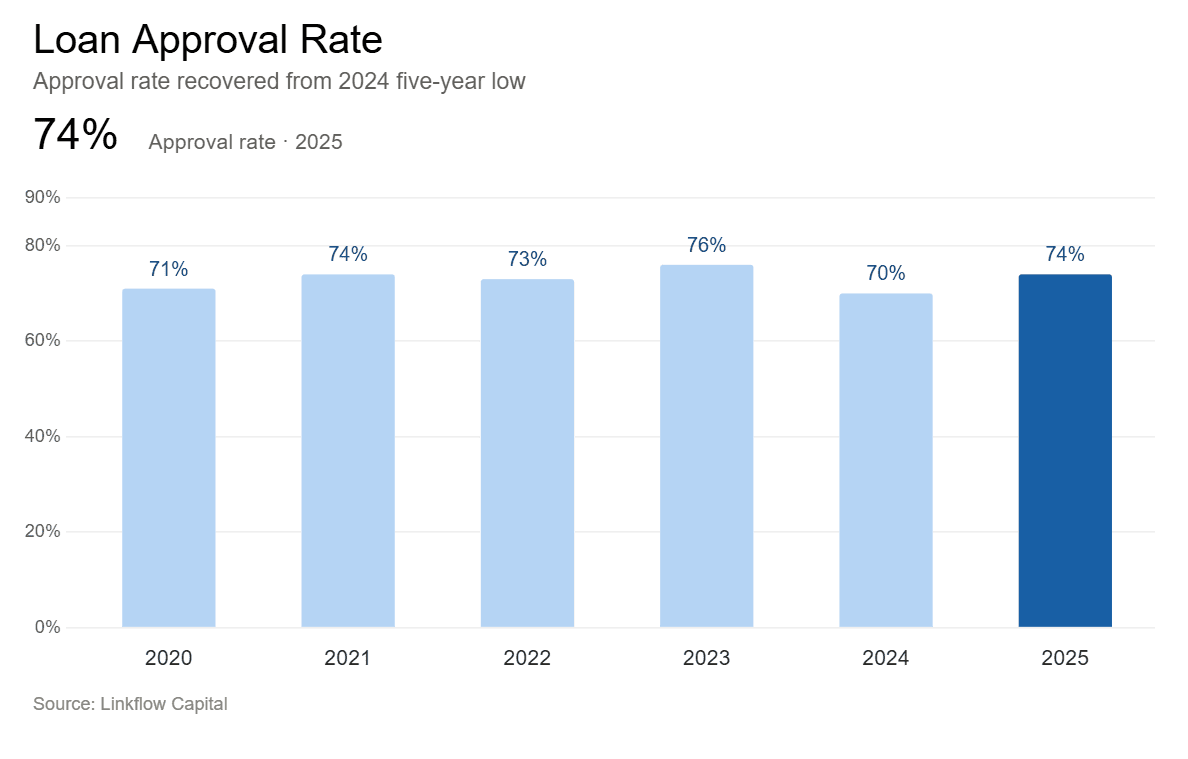
The 4 percentage point improvement in approval rate aligns with several developments observed through the year.
The return of larger ticket approvals also suggests banks broadened their credit appetite at the upper end. Government-backed financing schemes such as the SME Working Capital Loan, with the permanent $500,000 cap, provides a structural support layer for qualifying applicants.
That said, the recovery to 74% remains a partial reversion rather than a full return to the higher approval rates seen between 2021 and 2023, where government financing schemes provided a higher level of risk sharing to participating financial institutions.
With about a quarter of applications still being declined, fundamental business viability indicators such as revenue scale, cash flow strength, business age, and credit history continue to be the deciding factors in underwriting outcomes.
For applicants who failed to secure financing, the underlying reasons remain consistent with prior years' patterns, though one notable shift in 2025 stands out.
Why SMEs Fail to Access Financing
In 2025, half of users on our platform were classified as ineligible for financing or had limited financing options.
While this is an improvement from the 58% who were classified ineligible in 2024, it still indicates persistent structural barriers. We studied the most common reasons why SMEs failed to qualify in 2025:
- 38% were rejected due to low revenue and weak cash flow
- 22% were new startups with short or no operating track record
- 15% lacked minimum local shareholding % required by banks
- 14% had weak/adverse financial documentation, i.e. loss-making or negative equity positions
- 11% faced poor credit bureau scores or other adverse credit records

The most common reason for rejection in 2025 remained "low revenue and weak cash flow" at 38%, consistent with previous years and unsurprising given that more than half of our applicants reported revenue below $300K.
Almost all banks apply minimum revenue thresholds and require evidence of healthy cash flow before considering a business loan application.
Rejections due to weak financial documentation eased slightly to 14% from 18% in 2024, possibly reflecting improved financial performance for some SMEs' books in 2024 and 2025.
The most notable shift in 2025 was the rise in credit bureau and adverse credit-related rejections, climbing from 3% in 2024 to 11% in 2025. This near four-fold jump suggests rising stress on personal credit profiles among SME owners.
Singapore's elevated cost of living, higher household debt servicing burdens, and tighter consumer credit conditions through 2024 and 2025 have likely affected the personal credit scores of many SME owners.
As all banks reference heavily on personal guarantees for unsecured SME lending, deteriorating personal credit profiles directly impact business loan eligibility.
Rolled-over unpaid credit card debt in Singapore crossed $9 billion in 3Q 2025, hitting a 10 year record high [4].

While the eligibility profile has improved compared to 2024, the new pattern of rising credit-related rejections is worth watching. It may serve as a leading indicator of broader personal financial stress that could affect SME credit access in 2026.
Application Turnaround Time
For approved cases originated through banks, the average turnaround time from application to disbursement extended to 33 days in 2025, up from 22 days in 2024 and 21 days in 2023. The slowdown is meaningful, adding around two weeks to the typical SME's wait for funds.
We used application-to-disbursement days in our methodology instead of application-to-approval days.
Some banks assess credit applications upfront but layer their due diligence and compliance checks post approval, pre-disbursement. This would reduce the application-to-approval days significantly vs banks who front-load their full credit plus compliance checks upfront.
Application-to-disbursement days would provide clearer and more meaningful data how long on average SMEs expect funds to hit their account from start of an application.
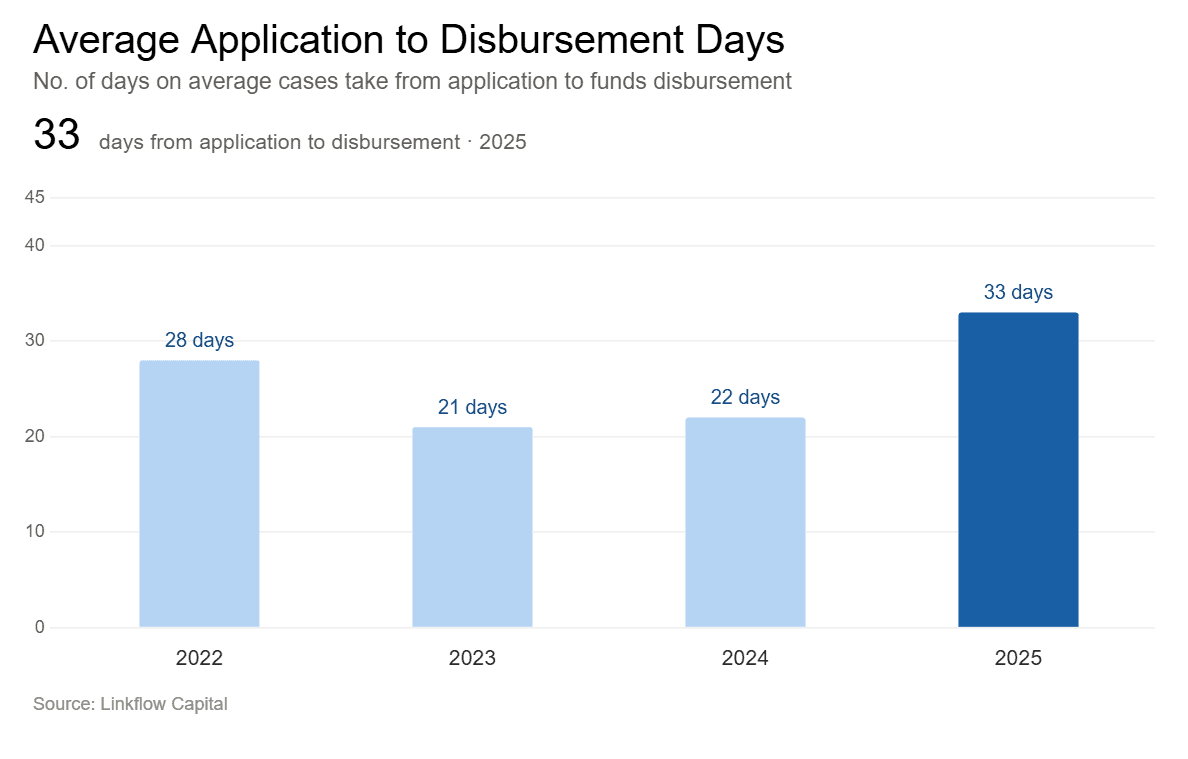
The lengthening of banks' application turnaround time can be attributed to several factors observed through 2025.
First, banks approved more larger ticket-sized loans in 2025 compared to 2024. Loans above $300K accounted for 12% of approvals in 2025, up from a combined 3% in 2024.
Larger quantum applications inherently require deeper credit risk assessment, which adds working days to the underwriting process. Credit risk decisioning often deliberate longer on bigger exposures, particularly for unsecured loans.
Second, banks have continued to enhance their compliance, KYC and due diligence processes through 2025, possibly in response to evolving regulatory expectations. From our observations on the ground, onboarding of new-to-bank businesses are also subject to more compliance checks.
The combination of these factors has produced a structural shift in expected wait times, even as banks themselves have modestly relaxed credit appetite.
SME owners should plan financing applications well ahead of capital needs, particularly when applying for larger loan quantum.
For SMEs facing more time-sensitive working capital needs, however, an alternative has come into sharper focus through 2025.
Non-bank Alternative Funders: Faster, but at a Cost
While banks slowed, non-bank alternative funders processed approved applications in an average of just 7 days in 2025. The fastest non-bank funder case we handled disbursed approved cases within 2 days of submission.
The 26-day speed gap reflects the structurally different operating models between the two lender categories. Non-bank funders typically rely on automated credit scoring algorithms and lighter-touch verification processes.
Many also work with shorter loan tenors and smaller ticket sizes, which carry lower exposure risk per case. They are not subject to the same regulatory capital requirements or the lengthy KYC and compliance protocols that apply to banks.
The trade-off, however, is cost. Non-bank funders typically charge higher effective interest rates than banks, often calculated on a per-month basis rather than per annum.
Their loan tenors also tend to be shorter, ranging from 6 to 10 months, compared to up to 5 years for traditional bank-issued working capital loans.
For smaller, short-tenor financing needs where speed matters more than cost optimization, this trade-off can be acceptable. For larger, longer-tenor borrowing needs, banks remain the more cost-efficient choice.
This processing speed advantage has translated into meaningful market share gains for non-bank funders in our 2025 data, particularly in case-count terms. While they remain the smallest share of overall loan dollar volume, their reach has clearly broadened.
This brings us to the broader shift in loan origination across lender types in 2025.
Loan origination by lender types
The lending environment in 2025 didn't just affect the cost or quantum of credit SMEs could access. It also reshaped where they sourced their loans from, with foreign banks emerging as a notably larger share of approved loan volume in 2025.
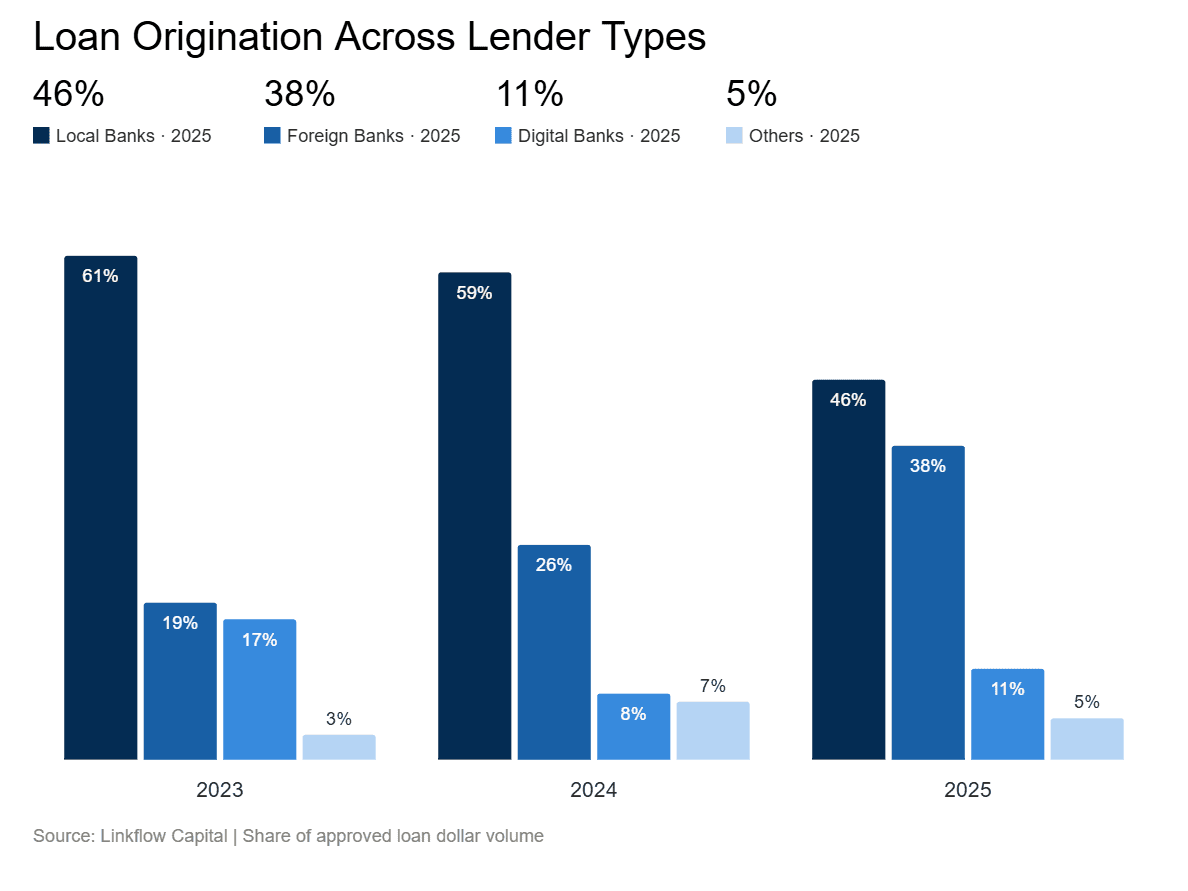
Our internal data shows that local banks remained the dominant source of SME financing, accounting for 46% of approved loan dollar volume in 2025. However, this represents a notable decline from 59% in 2024 and 61% in 2023, marking a 13 percentage point drop in a single year.
The most striking shift in 2025 was the rise of foreign banks, whose share grew to 38% of approved loan dollar volume, up from 26% in 2024 and 19% in 2023.
Foreign banks with active SME franchise competed actively for SME market share through 2025, often through differentiated underwriting approaches.
Digital banks recovered modestly to 11% of approved loan dollar volume in 2025, up from 8% in 2024 but still well below the 17% peak in 2023. Following a year of recalibration in 2024 where new digital banks tightened credit underwriting after their initial aggressive customer acquisition phase, they appear to have stabilized their portfolio strategies and resumed measured loan originations through 2025.
Non-bank funders and other alternative lenders accounted for 5% of approved loan dollar volume in 2025, broadly stable compared to 7% in 2024. Although their case-count share grew more notably through the year, particularly for smaller short-tenor financing needs, their share of overall loan dollars remains limited because they specialize in smaller ticket sizes.
Together, these developments suggest that SMEs today must be more strategic not just in preparing their loan applications, but also in choosing the right financing partner, balancing approval likelihood, cost of borrowing, disbursement speed, and long-term financing flexibility.
Beyond just interest rates and choice of banker, another less-discussed and often overlooked financing cost component that should also be covered is loan processing fee.
Banks’ Loan Processing Fee
While headline interest rates eased modestly in 2025, banks continued to nudge up loan processing fees, extending a multi-year upward trend.
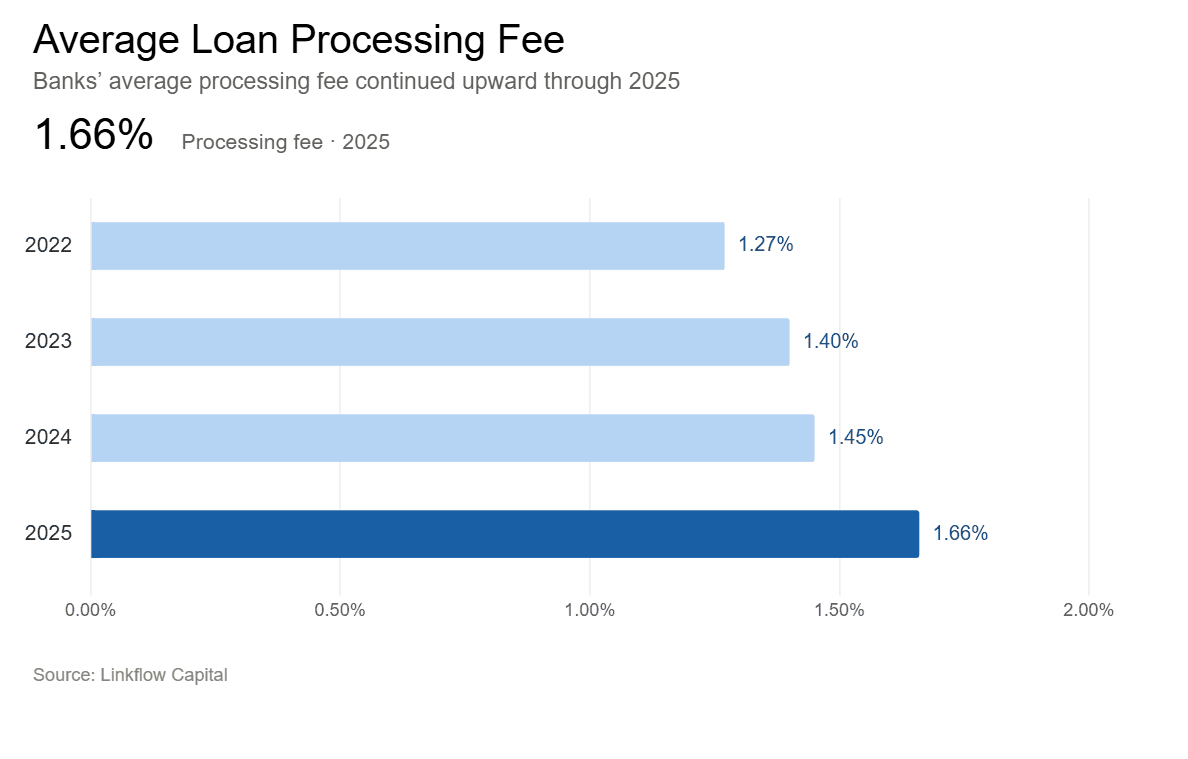
Our internal data shows the average bank processing fee climbed to 1.66% in 2025, up from 1.45% in 2024. This represents a 21 basis point increase year-on-year, the largest single-year jump in the four-year period.
While the absolute increase remains marginal in dollar terms for most loans, the persistent upward direction of processing fees is notable. As headline interest rate eased modestly through 2025, upfront processing fee has increased.
Together, the developments in interest rate, processing fee, and turnaround time suggest that SMEs in 2025 needed to think more strategically about the all-in cost of borrowing, not just the headline interest rate.
Total cost of borrowing should also account for processing fees, late payment charges, early redemption fees, and the opportunity cost of delayed funds disbursement.
With the lender landscape examined, the next question turns to the SMEs themselves. Who are the businesses actively seeking financing in 2025, and what does their profile reveal about credit demand?
Age of SMEs seeking financing
Our data shows a broad range of SME profiles accessing financing in 2025, with no single business age group dominating the applicant pool.
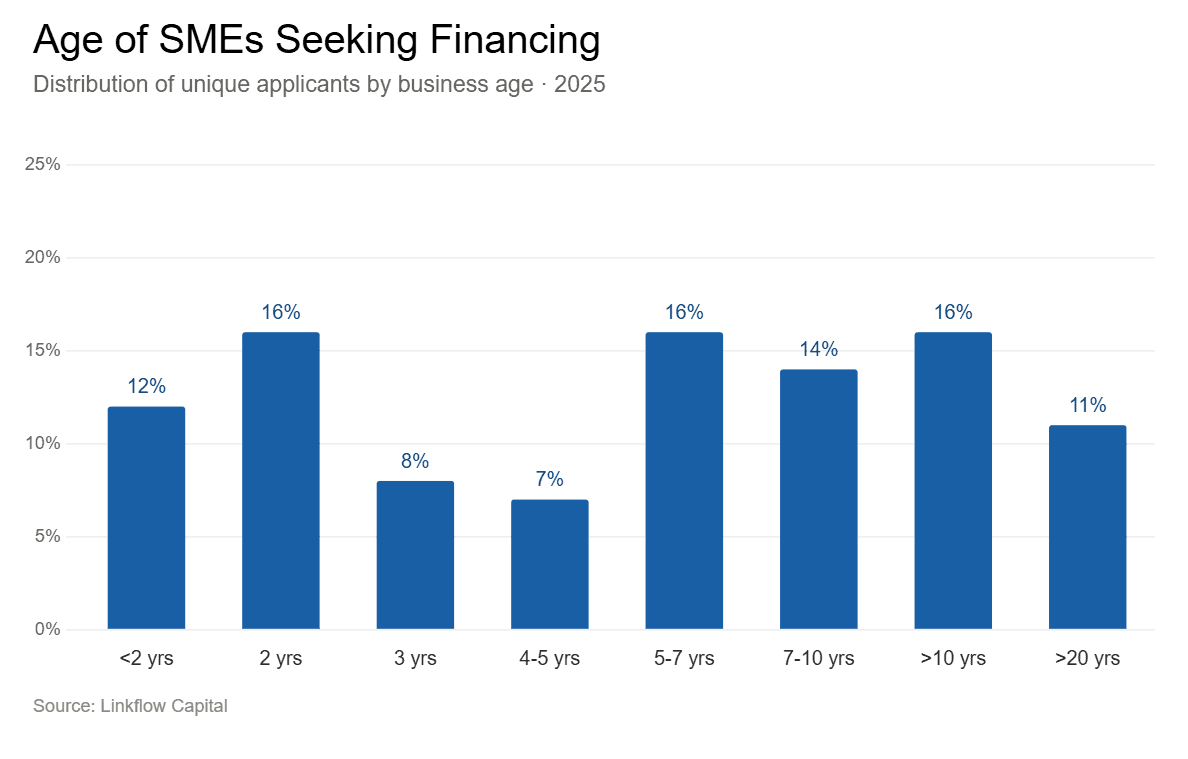
The distribution remained relatively even across age bands in 2025, consistent with the pattern observed in 2024.
Younger businesses (under 3 years old) collectively accounted for 36% of applicants. Established businesses (over 7 years old) represented 41%. Mid-tenured businesses between 3 and 7 years made up the remaining 23%.
This balanced spread suggests that demand for SME financing is not concentrated in any single business lifecycle stage.
Younger startups continued to seek financing for early growth and working capital, while more mature companies sought funding for expansion, refinancing, or seasonal cash flow needs.
Both ends of the spectrum continued to engage lenders, albeit with different credit profiles and approval probabilities.
Notably, we observed a meaningful share of new entrants seeking financing on our platform. Many of these were first-time borrowers without prior bank credit relationships, a trend we examine more closely in the next section.
First-time Borrowers Form the Majority
A new data point explored in our 2025 survey reveals an interesting segment of our applicant base: 82% of users on our platform declared having no existing business loan facilities.
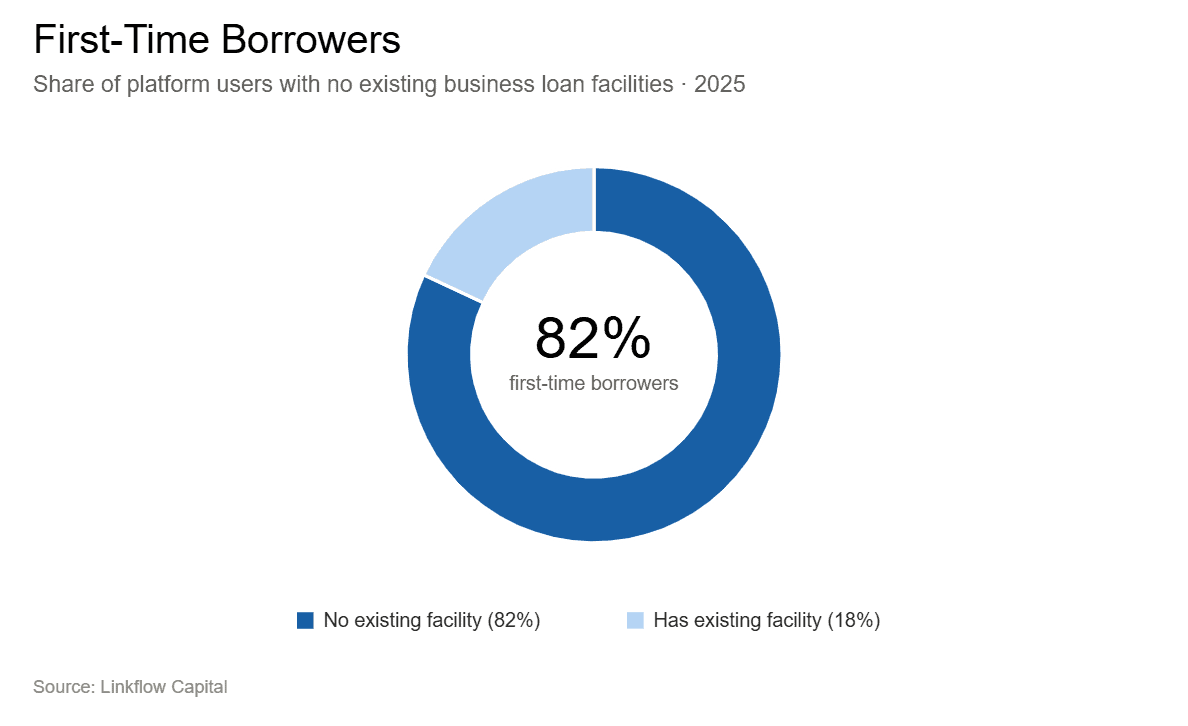
This figure points to a large segment of SMEs who are effectively first-time borrowers, seeking formal credit financing for the first time or coming back to the credit market without active facilities.
Only 18% of users declared having an existing business loan facility with a bank or financial institution.
The implication is meaningful. A substantial pool of Singapore SMEs operates without formal bank credit relationships, relying on internal cash flow, retained earnings, owner injections, or informal financing to fund their operations.
As business needs grow or as cash flow tightens, these SMEs eventually turn to formal credit financing. Many of them, however, encounter difficulties in their first interaction with banks, particularly if their financials, cash flow, or credit history fall short of the typical underwriting bar.
This observation aligns with the MAS Financial Stability Review [2] finding that the number of SME borrowers in Singapore has been steadily rising, even as outstanding SME loan volumes declined.
For Linkflow, the high share of first-time borrowers also points to the role of independent loan comparison platforms in helping SMEs navigate an increasingly complex lending market.
SMEs without prior banking relationships often lack familiarity with which financial institution are best suited to their credit profile, what loan products are appropriate for their specific scenario, or how to optimize their applications for approval. Platforms that aggregate options and provide guidance fill this gap.
The profile of first-time borrowers also has implications for what kinds of credit needs SMEs are seeking financing for, and whom they sell to.
Selling to Larger Counterparties
Another new dimension our 2025 survey captured is the share of SMEs whose customers include large multinational corporations, listed companies, or government statutory boards on credit terms.
Only 17% of platform users in 2025 sells to large MNCs, listed companies, or government statutory boards with credit terms. The remaining 83% predominantly sell to other smaller businesses or retail consumers.
This data point carries practical implications for SME financing access. Selling to large, creditworthy counterparties on credit terms unlocks access to a different category of financing products such as invoice financing, trade financing, and supply chain finance.
For the 83% of SMEs without such counterparties, working capital loans, and term loans remain the primary financing avenues. These products rely heavily on the SME's financial profile, cash flow strength, and credit history.
The financing options available to an SME also depend heavily on what industry the business operates in. This brings us to the industry segments breakdown of our 2025 applicants.
Industry segments breakdown
The retail and F&B industries continued to form the two largest segments within our platform in 2025. SMEs in construction and support services also represented meaningful shares of applicants.
Internally, our data points for support services industry include sectors such as cleaning, security, vehicle repairs and landscaping.
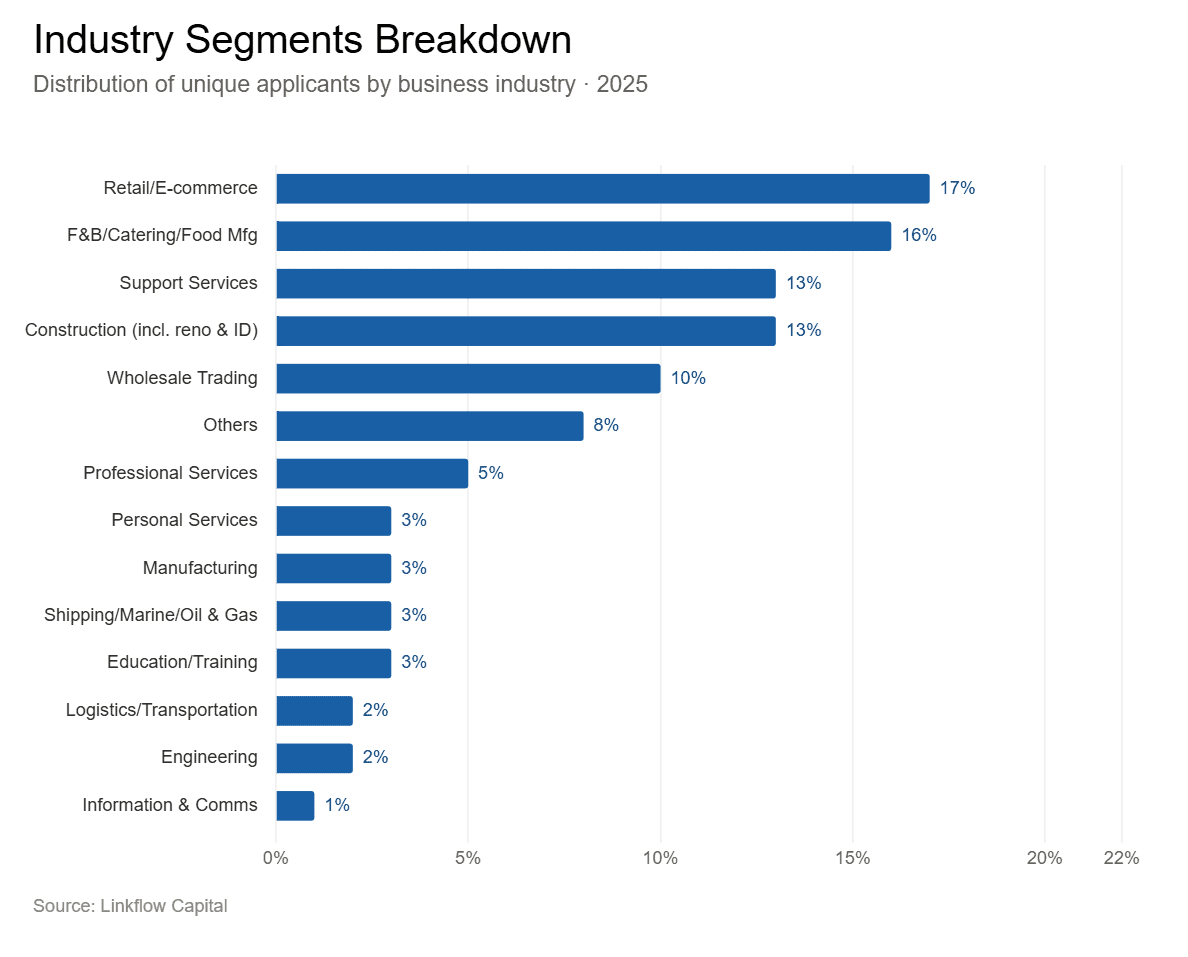
The top 4 industry segments within our client base are all domestic facing sectors. Wholesale trading segment which forms 10% of total users, falls to fifth in our user's distribution, down from 17% and second largest segment in our 2024 study.
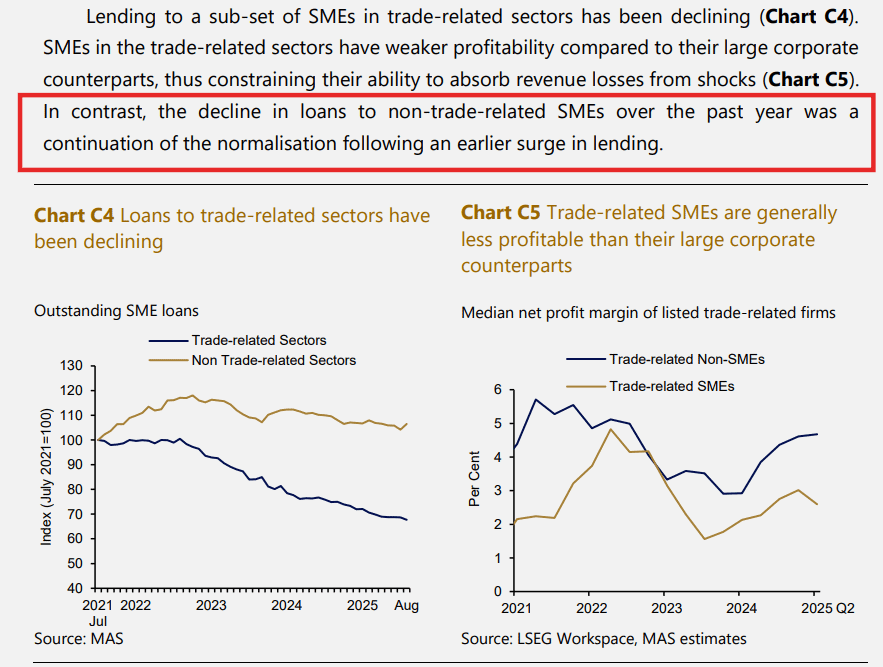
According to the MAS Financial Stability Review 2025 report [2], banks' financing to SMEs in trade-related sector has been declining over the years, due to weaker profitability versus their larger corporate counterparts.
Sectoral pressures remain a key consideration. While most industries on our platform held steady or grew through 2025, broader business closure data and tariff-driven uncertainty continue to weigh on sentiment.
This brings us to a broader macro context that shaped the SME financing environment in 2025.
US Tariff Overhang
The sectoral mix described above unfolded against a notably more uncertain macroeconomic backdrop in 2025. One such pressure shaped the operating environment for SMEs through the year: the unexpected escalation of US trade tariffs.
The most significant macroeconomic event of 2025 was the US Liberation Day tariffs announced in early April 2025. The announcement triggered a sharp recalibration of growth expectations across export-dependent economies, including Singapore.
The Ministry of Trade and Industry then revised Singapore's 2025 GDP growth forecast from 1% to 3% down to 0% to 2% [5], reflecting expected drags from weaker external demand and increased global trade frictions.
In response, the Singapore government convened the Singapore Economic Resilience Taskforce (SERT) in April 2025 to monitor the situation and coordinate support measures for affected businesses.
Eventually, Singapore's economy remains unscathed and full GDP growth remained resilient, beating earlier expectations at 4.8% for the full year 2025.
Despite these macroeconomic headwinds, one credit metric remained relatively contained.
SME NPL ratio
The aggregate Non-Performing Loan (NPL) ratios for SMEs reported by MAS [2] declined further in 2025, falling to approximately 2% by the second quarter of 2025, down from around 3% in 2024. The figure represents the lowest SME NPL ratio recorded in recent quarters.
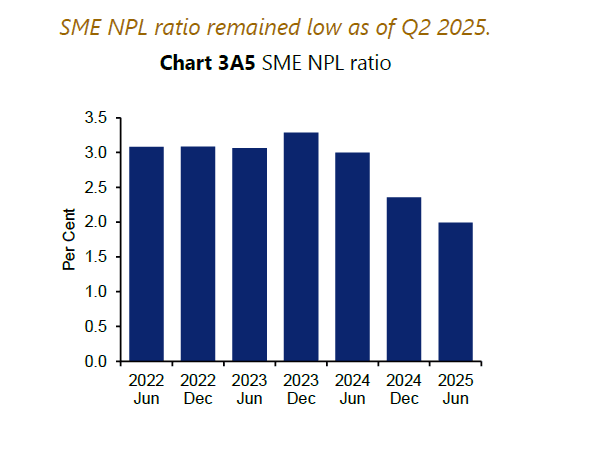
Cautious lender behavior may also be pre-emptively limiting new credit exposure to higher-risk segments, which could have helped contain headline NPL growth even as economic stress builds in pockets of the SME landscape.
Overall, the contained NPL ratio is a positive signal for system-wide financial stability, but it should not be read as an all-clear for SME credit quality.
We continue to expect lender vigilance to remain elevated through 2026, with selective tightening in sectors most exposed to tariff and demand-side shocks.
This challenging-but-stable backdrop sets the context for examining the forward-looking sentiment shaping the SME financing outlook in the year ahead.
Outlook for 2026
If 2025 was shaped by US tariffs shock, then the main geopolitical event in 2026 for Singapore SMEs will be dominated by the ongoing Middle East conflict.
The US-Iran war have introduced new uncertainty for global trade and energy markets.
Cautious optimism in business sentiment
Business sentiment surveys point to early signs of stabilization in growth expectations, even as cost pressures and access to financing remain pressure points.
The SBF National Business Survey for Q4 2025 [6] reported that the Business Sentiment Index (BSI) rose by 1.2 points to 53.4, breaking a six-month downward trend.
However, the same survey noted that cost expectations rose sharply from 56.6 in Q3 2025 to 71.0 in Q4 2025 SBF, signaling that businesses anticipate cost pressures intensifying through 2026 even as growth expectations modestly improved.
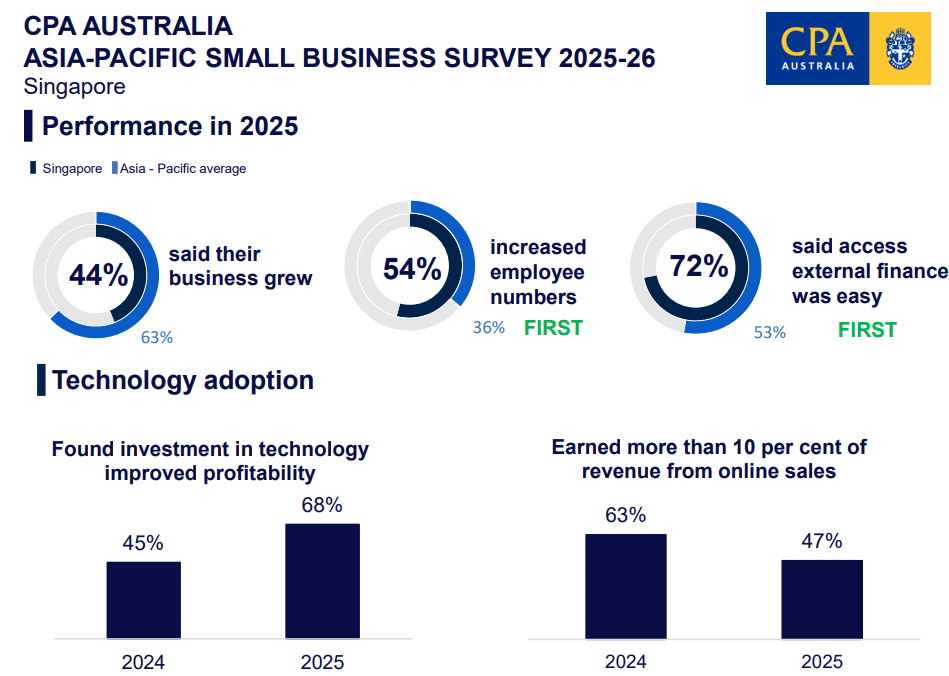
The CPA Australia Asia-Pacific Small Business Survey 2025-26 [7] further reinforced this nuanced picture. Only 44% of Singapore small businesses reported growth in 2025, down from 51% in 2024 and well below the regional survey average of 63%.
Yet 46% indicated plans to introduce new products, services or processes in 2026, the highest result across all 11 markets surveyed, suggesting that despite the slower growth, Singapore SMEs are leaning into innovation and adaptation.
A new macroeconomic stress point: the Iran war
Just as the SME financing landscape was beginning to find footing after the 2025 tariff overhang, a new and more severe geopolitical shock has emerged.
The US-Israel-Iran war that began in February 2026 is the most consequential macroeconomic event facing Singapore SMEs going into the year ahead.
The conflict has caused immediate and substantial disruptions to global energy and shipping markets. Brent crude oil prices have surged by 10 to 13% to around US$80 to US$82 per barrel by early March 2026 [10].
Iran's intermittent disruption of the Strait of Hormuz has elevated freight, energy, and shipping costs across the region.
Singapore is particularly exposed. As a highly open and trade-dependent economy, the country relies heavily on imported energy and serves as a key node in maritime and aviation routes connecting Asia, Europe, and the Middle East.
Higher fuel costs are likely to feed through input costs from electricity tariffs, transport fuel to broader production costs across the economy.
The impact on SMEs is expected to be more acute than on larger corporates. SMEs typically operate with thinner margins and less ability to absorb input cost shocks, leaving them more vulnerable to a prolonged conflict environment.
For SME financing specifically, the implications are likely twofold:
Higher input costs feeding into working capital needs. SMEs facing rising fuel, shipping, and energy bills will see operational cash flow tightening, increasing the urgency of access to working capital financing. Businesses that previously held off applying for financing may re-engage, supporting near-term loan demand.
Lender caution likely to re-tighten. Banks may revert to a more conservative stance on credit underwriting in response to elevated geopolitical and credit risk. The modest 2025 thaw in larger ticket-sized loan approvals could partially reverse if the conflict escalates or persists. Risk premiums in SME lending rates may widen again, potentially halting or reversing the modest interest rate decline observed in 2025.
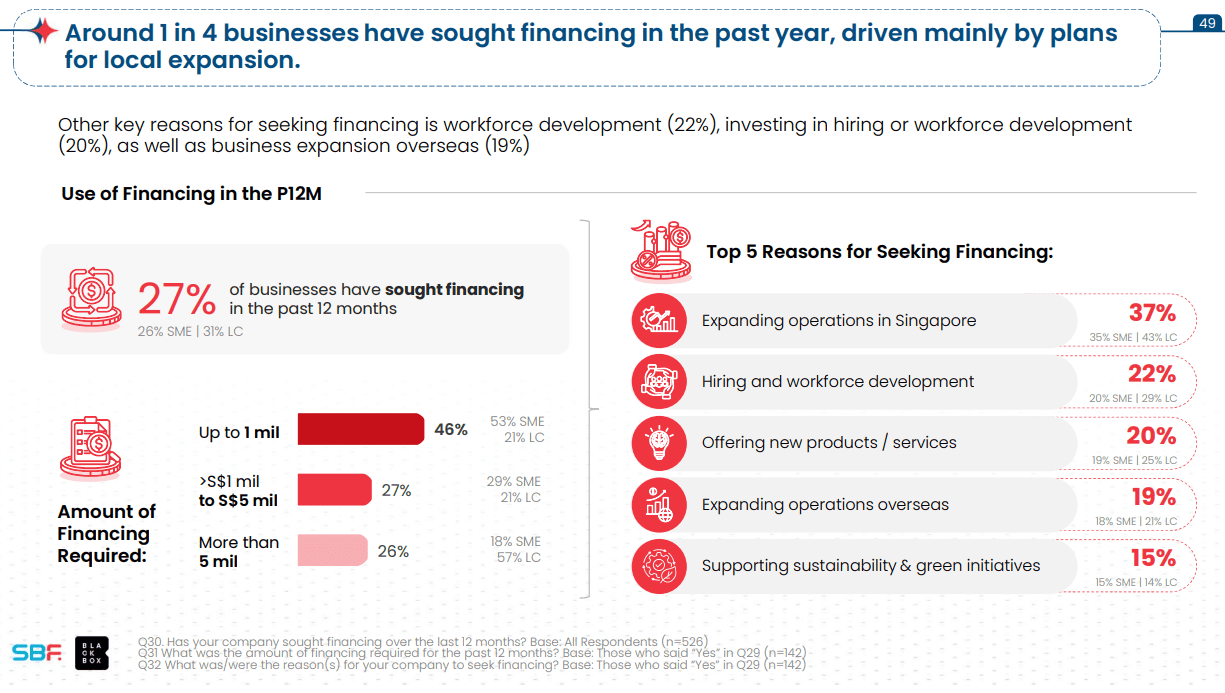
In a 2025 SBF survey, around 1 in 4 businesses have sought financing in the past year, driven mainly by plans for local expansion.
We expect more SMEs to seek financing for operational cash flow and working capital buffers in 2026 amidst the inflationary spike in input costs.
Final Note
In a year marked by both modest relief and renewed uncertainty, the central message for SMEs entering 2026 has not changed.
Prudent cash flow management remains the most important determinant of SME resilience. The Middle East war and the prior US tariff overhang have once again underscored how quickly external conditions can shift.
SMEs that maintain healthy free cash flow, sufficient cash buffers, and conservative debt servicing ratios will be best positioned to navigate the year ahead, regardless of how the geopolitical environment evolves.
Where viable, SMEs should consider locking in affordable financing now, while interest rates have eased modestly and banks continue to extend credit.
Securing additional liquidity ahead of need is far easier than trying to obtain financing during a credit tightening cycle. The lessons of 2024, when ticket sizes shrank and approval rates fell to a 5-year low, remain instructive.
Singapore's high trade dependence mean that SMEs remain especially exposed to external shocks. Trickle-down effects from a prolonged global trade slowdown will hurt almost all industries, including domestic-facing service-based SMEs.
Our mantra for SMEs on financing has not changed: always apply from a position of strength. Banks and funders will always extend financing to borrowers who can prove they don't need it.
Strong financial fundamentals, healthy cash flow, and a clean credit track record are not just credit assessment criteria. They are the foundations of resilient businesses that can weather the cycles ahead.
Research methodology
This study employs a quantitative approach based on data collected from our SME financing comparison platform. The methodology encompasses the following key aspects:
- Data Collection: We aggregated data from 2,231 unique users of our SME loan portal between January and December 2025. We also included internal data from clients’ financing engagements within our platform for the same period.
- Data Cleaning: To ensure data integrity, we implemented a rigorous process to remove duplicate entries and filter out spam/unverified submissions from the database.
- Sample Characteristics: The dataset comprises self-reported information provided by SMEs seeking financing options. It's important to note that the data was used "as is" without manual verification of individual entries.
- Data Analysis: We conducted statistical analysis on anonymized and aggregated data of our internal financing applications to derive insights into SME financing trends, loan approval rates, interest rates, and sector-specific patterns.
- Anonymization and Aggregation: All internal statistics were anonymized and aggregated to generate summarized insights, ensuring the privacy and confidentiality of individual user information, while adhering strictly to the Personal Data and Protection Act 2012 (PDPA).
- Limitations: While this methodology allows for a broad overview of SME financing trends, it relies partially on self-reported data and may not capture the full spectrum of SME financing activities in Singapore.
This approach enables us to compile a comprehensive snapshot of the SME financing landscape in Singapore for 2025, offering valuable insights for stakeholders as well as SMEs.
Sources and References
[1] https://www.mas.gov.sg/news/monetary-policy-statements/2025/mas-monetary-policy-statement-14apr25
[5] https://www.channelnewsasia.com/singapore/singapore-economy-gdp-2025-q1-trump-tariffs-mti-5053721
[6] https://www.sbf.org.sg/docs/default-source/about-us/sbf-nbs-2025-q4-business-sentiments.pdf
[8] https://mothership.sg/2026/03/sg-businesses-higher-costs-us-israel-conflict/