F&B Restaurant Financing Loans
Table of Contents
F&B restaurant loans are financing solutions tailored for SMEs in the food and beverage industry.
Running a restaurant in Singapore is a dream for many, but the reality is a tough, competitive grind. While passion fuels the kitchen, it's smart financing that keeps the lights on and the doors open.
Reality check: The F&B landscape in Singapore
- Closures have spiked. By 2025, Singapore has seen 307 F&B closures per month, versus 254 in 2024 and 230 pre-2023, affecting operators from hawker stalls to Michelin-star kitchens.
- Insolvency pressure: Singapore recorded a 5-year high in compulsory liquidations in 1H 2025; F&B was among the hardest-hit sectors.
- Choppy demand: Official data show F&B services fell 2.8% YoY in Mar 2025, then rose 0.1% YoY in June 2025. Almost a quarter of sales are online -important for delivery-heavy concepts
- Why the squeeze? Operators and analysts point to rising wages, utilities, elevated rents, weaker dine-in spend, cautionary discrete spending due to US tariffs, and travel substitution (locals spending more abroad)
When to Seek Financing
Strategic financing is a powerful tool for growth. F&B SMEs should consider approaching financing at several key junctures:
- Opening New Outlets: You've perfected your concept and have a loyal following. Expanding to a new location is the logical next step, but it requires significant capital for renovations, rental deposits, and initial operating costs. A loan can bridge this gap.
- Seasonal lull: If there are obvious seasonal lull trends in your data, i.e. if you operate in the CBD area with high expatriate foot fall and, end of year holidays will be a slower period. Consider tapping onto a revolving line of credit to ensure cash flow smoothens out during a temporary lull season.
- Purchasing Essential Equipment: Upgrading your kitchen with more efficient, high-capacity equipment can slash cooking times, reduce labor dependency, and improve consistency. Financing can make that combi oven or industrial-grade freezer an affordable reality.
- Setting Up a Central Kitchen: When you have several outlets, a central kitchen becomes a game-changer. It standardizes quality, reduces costs through bulk purchasing (achieving economies of scale), and streamlines operations at each branch. This is a major capital investment that often necessitates a loan.
- Expanding into Shopping Malls: Getting a spot in a high-traffic mall can drastically increase brand visibility and sales. However, this comes at a steep price. Mall operators often demand hefty security deposits (3- 6 months' worth of rent) and might charge a percentage of your sales as Gross Turnover (GTO) rent on top of a base rent. Financing is almost always required to cover these substantial upfront capex costs.

Common pains & challenges in F&B financing
For many F&B owners, especially smaller heartland operators, securing a SME loan is challenging. The most significant hurdle is poor cash management.
Many traditional eateries collect a substantial portion of their revenue in cash, sometimes between 20% to 50% of revenue. This cash is often used directly to pay suppliers or for petty cash expenses without being banked into their bank account.
The Problem: Banks and financial institutions assess your business's health based on cash flow trends. Your bank statements are the primary proof of your revenue and cash flow.
If a significant chunk of your sales is invisible because it was never banked, the banks’ credit assessment will not factor in your true revenue.
The Solution: The fix is simple. Bank all your cash receipts. Pay your suppliers via bank transfers or cheques. This creates a clean, verifiable paper trail that accurately reflects your business's true turnover and cash flow.
Financing routes for F&B Businesses
Bank loans with government risk-sharing (EnterpriseSG)
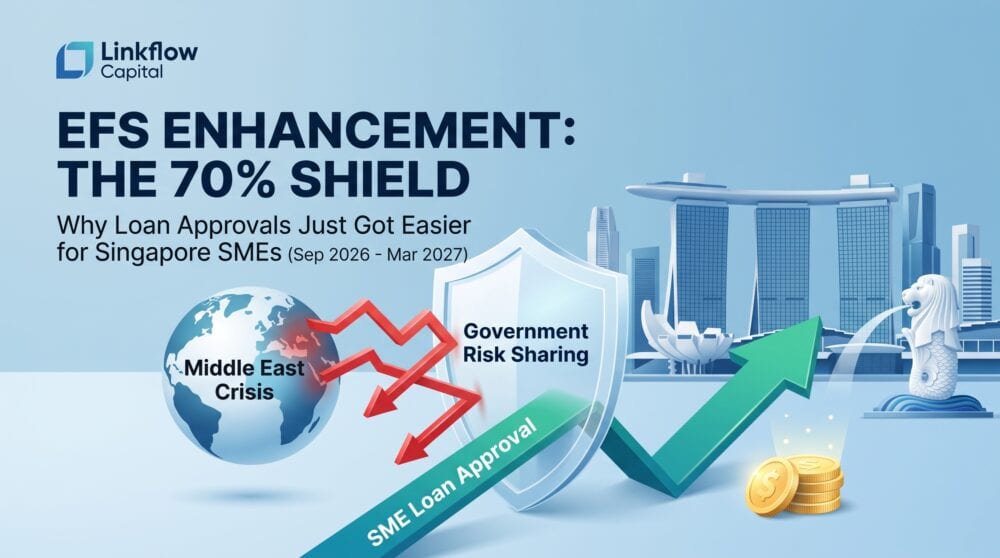
- Enterprise Financing Scheme (EFS): umbrella financing programme with tracks for Working Capital, Fixed Assets, Trade, Green, etc. The EFS-SME Working Capital Loan offers up to S$500,000. The government shares default risk with participating banks.
Government grants (reduce capex, improve cash)
- Productivity Solutions Grant (PSG): up to 50% support for pre-approved solutions - POS, QR ordering, inventory, HR, accounting, etc
- Enterprise Development Grant (EDG): co-funds upgrade/innovation projects (consultancy, software/equipment, manpower).
- Energy Efficiency Grant (EEG): co-funds energy-efficient equipment (Base Tier up to S$30k; higher for Advanced Tier
(Grants are not loans, but lowering capex and digitizing operations makes you more bankable.)
Other alternative financing solutions
- Digital/fintech lenders/platforms: SME comparison platforms such as sg offers a one-stop loan comparison portal on all financing options.
- Revenue-based financing (RBF): Repay as a % of monthly sales until a cap is reached. Useful for seasonal F&B cashflows with no equity dilution. If you’re a Grab merchant for food delivery, Grab Finance offers a RBF facility.
Use financing to raise productivity
Investing in modern technology isn't an optional expense item, but a necessity that directly impacts your bottom line and your ability to secure financing.
A modern Point of Sale (POS) system is your command centre. It does far more than just process payments. Use financing to invest in a comprehensive solution that offers:
Invest in your POS “stack”
- What to adopt: Integrated POS + QR self-order + queue management + inventory, with integrated CRM and loyalty programmes.
- Why it matters: Faster table turns, fewer order errors, actionable dashboards, staff redeployed to higher-value tasks. Improve speed and labour-savings gains
How to fund: Apply PSG for pre-approved POS/IT solutions (up to 50% support) and layer a small business loan facility for the balance.
Analytics for menu engineering
- Use POS reports to rank items by popularity and gross margin. Rework pricing/recipes or retire low-margin, slow-moving SKUs.
Kitchen efficiency & energy savings
- Where suitable, switch to energy-efficient ovens/chillers and claim EEG support, paired with an equipment loan for the remainder.
By navigating the market's challenges with a clear financial strategy, embracing disciplined cash management, and leveraging technology, you can turn your culinary passion into a sustainable and thriving business.